
- Additional testing
- CT scan
CT scan
Computed Tomography
CT stands for computed tomography. A CT scan combines elements of both an MRI and an X-ray. In a short amount of time, multiple X-ray images are taken from various angles. A computer then merges these individual images into a single 3D image.
This technique is particularly effective for examining bones, lungs, abdominal organs, blood vessels, and the brain. To visualize other tissues, an MRI scan is generally more suitable. The doctor determines which type of examination will best identify the problem.
How does a CT scanner work?
A CT scanner is a ring-shaped device with a table where the patient lies down. The ring rotates around the patient, capturing images from multiple angles. It is important to lie as still as possible to ensure clear images.
The CT scanner emits X-rays that pass through the body and are detected on the other side. Different tissues absorb varying amounts of radiation, resulting in varying shades on the images. This contrast allows for differentiation between tissues.
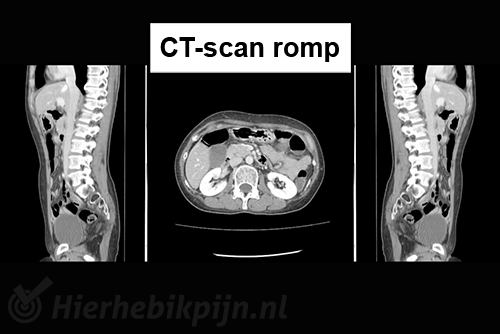
After each image, the scanner shifts slightly to capture the next angle. This process continues until a full 360-degree scan is completed, creating a 3D image.
Although a CT scan only takes a few minutes, it exposes the body to a significant dose of X-ray radiation. It is crucial to inform the doctor if you might be pregnant. A single X-ray involves less radiation, while an MRI scan uses no radiation at all.
A radiologist evaluates the CT scan, and the patient receives the results later through their own doctor.
What can we improve according to you?
Let us know, your opinion is important to us.
Thank you for your feedback!
We will work even harder to improve the quality of Physiocheck.com.au.
Did this information help you?